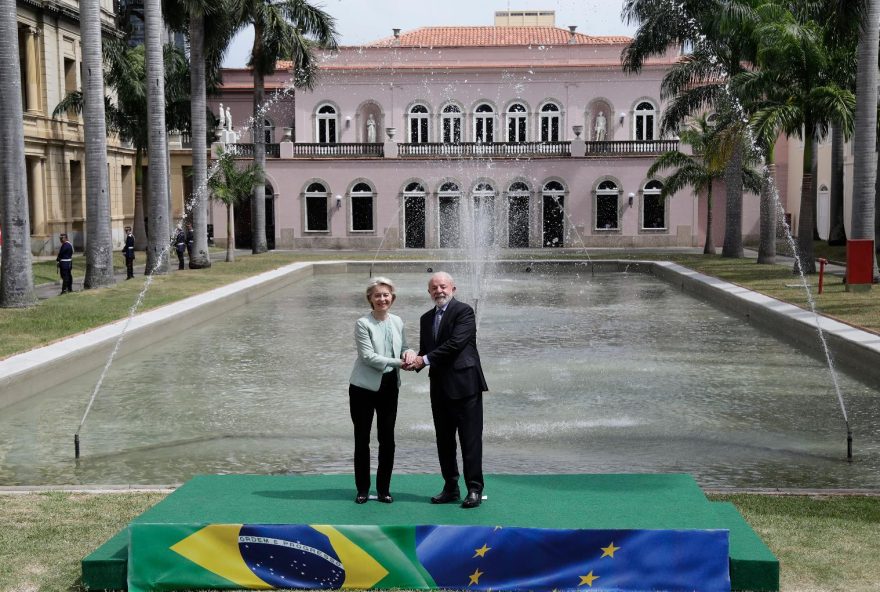
Brazilian President Luiz Inácio Lula da Silva and European Commission President Ursula von der Leyen celebrated the anticipated signing of the free trade agreement between the European Union and four South American countries. The landmark deal involves the two largest economies in Mercosur, Brazil, and Argentina, alongside Paraguay and Uruguay. The formal signing of this agreement, which has been in the works for twenty-five years, was scheduled to take place on Saturday in Paraguay. The newest Mercosur member, Bolivia, although not part of the initial negotiations, has the option to join the agreement in the future.
While reports confirm that representatives from Argentina and Uruguay will attend the ceremony in Paraguay, Brazilian President Lula opted not to be present at the event. Instead, he designated Foreign Minister Mauro Vieira to represent Brazil. Lula’s decision surprised some observers, given his strong advocacy for the deal since his return to the presidency in 2023. His absence is seen as a possible reaction to the agreement not being signed during Brazil’s recent presidency of Mercosur.
During a press conference in Rio de Janeiro alongside von der Leyen, Lula emphasized the lengthy process of the negotiations, expressing satisfaction at finally reaching a resolution. Despite his absence at the signing, Lula described the upcoming agreement as a historic step, uniting approximately 720 million people and generating a combined GDP of over $22 trillion.
Ursula von der Leyen commended Lula’s dedication to the deal, recognizing his instrumental role in its progression. The European Council also acknowledged Brazil’s pivotal role during its Mercosur presidency in advancing the negotiations. This agreement holds significant global importance, especially in light of the shifting international economic landscape, with the EU and Mercosur positioning themselves as major players in global trade.
The free trade agreement signifies a victory for both the EU and Mercosur, offering South American nations improved access to the European market for agricultural products. This access is expected to boost EU-bound agricultural exports such as instant coffee, poultry, and orange juice, estimated to generate $7 billion in revenue in the coming years. Lula affirmed Mercosur’s intent to move beyond a focus on commodity exportation and expand into selling higher value-added industrial goods.
Flavia Loss, a professor of international relations in Sao Paulo, interpreted Lula’s absence at the signing as a strategic move to assert Brazil’s stance on seeking equitable terms in the agreement. This decision reflects Mercosur’s aspiration to establish a balanced partnership with the EU while leveraging its strengths in various sectors.